
Japan’s real estate market has attracted growing attention from international investors in recent years. Property prices in major cities such as Tokyo, Osaka, Kyoto, and Fukuoka have continued to rise, creating new opportunities for both domestic and overseas buyers.
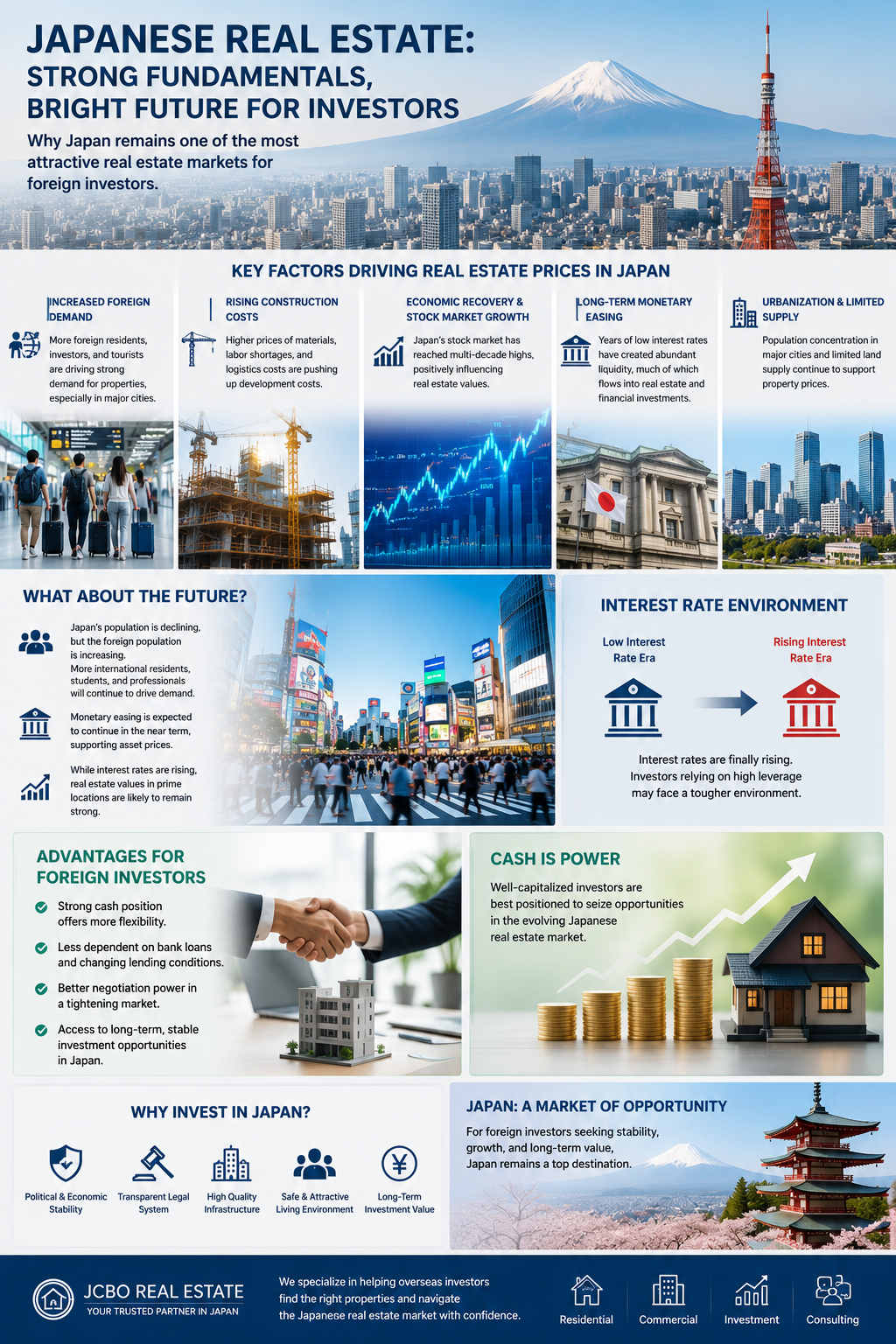
Many people believe that foreign investment is the primary reason behind rising property prices in Japan. While increasing demand from overseas investors certainly plays an important role, there are several other significant factors driving the market.
One major factor is the rapid increase in construction costs. The prices of building materials, labor, and transportation have risen substantially over the past few years. Japan is also facing a shortage of skilled construction workers, which has further increased development costs. As a result, the cost of developing new residential and commercial properties continues to rise, pushing property prices upward.
Another important factor is Japan’s economic history. Following the collapse of the asset bubble in the early 1990s, Japanese real estate prices declined for many years. Compared with other major global cities, Japanese property remained relatively affordable for a long period. In recent years, however, Japan’s stock market has reached levels not seen for decades, and the recovery of asset prices has begun to influence the real estate sector as well.
Monetary policy has also played a significant role. For many years, the Japanese government and the Bank of Japan implemented large-scale monetary easing measures to stimulate economic growth. This created a substantial amount of liquidity within the financial system. Much of this capital eventually flowed into financial assets and real estate investments, supporting higher property values across the country.
Looking ahead, many investors ask whether Japanese real estate prices will continue to rise.
Japan’s population is expected to decline over the long term, which may create challenges in certain regional areas. However, the situation is different in major metropolitan centers. Foreign residents, international students, business professionals, and overseas investors continue to increase in number, particularly in Tokyo and other major cities. This growing international demand is likely to support property values for years to come.
At the same time, interest rates in Japan have begun to rise after many years of extremely low borrowing costs. Higher interest rates may create challenges for investors who depend heavily on bank financing. Traditionally, many Japanese investors have relied on high loan-to-value financing or even full-loan investment strategies. As financing conditions become stricter, these investors may face a more difficult investment environment.
In contrast, investors with strong cash reserves may find themselves in a particularly advantageous position. Foreign investors who can purchase properties with substantial equity or cash have greater flexibility and are less affected by changes in lending conditions. They may also be able to negotiate more effectively when financing becomes less accessible to highly leveraged buyers.
For this reason, Japan’s real estate market may offer unique opportunities for well-capitalized international investors. While no market rises indefinitely, the combination of continued foreign demand, rising replacement costs, limited development capacity, and ongoing urban concentration suggests that high-quality properties in major Japanese cities may continue to perform well over the long term.
As always, investors should carefully evaluate individual properties, locations, financing conditions, and market trends before making investment decisions. However, for foreign investors seeking stability, transparency, and long-term value, Japan remains one of the most attractive real estate markets in Asia.
At JCBO Real Estate, we specialize in helping overseas investors navigate the Japanese property market. Whether you are looking for residential, commercial, or investment properties, our team can provide professional guidance and access to opportunities throughout Japan.