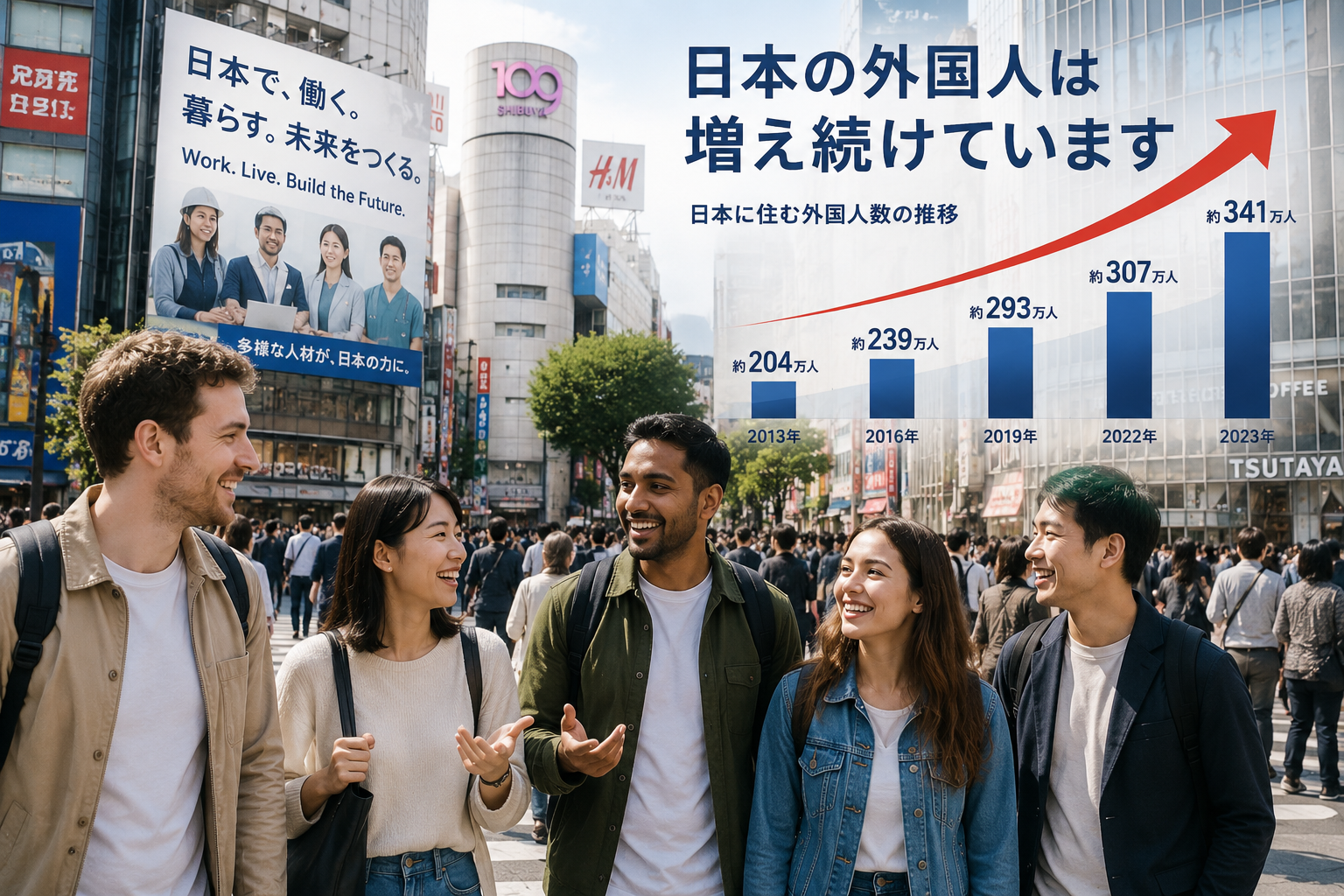
Japan is undergoing a significant social transformation. For decades, the country was known as one of the most homogeneous societies in the world. However, in recent years, the number of foreign residents living in Japan has continued to grow steadily, changing the country’s demographic landscape and creating new opportunities for businesses, communities, and investors.
The primary reason for this trend is Japan’s declining population and aging society. As birth rates remain low and the number of elderly citizens increases, many industries face severe labor shortages. To address these challenges, the Japanese government has gradually expanded immigration programs and work visa categories, allowing more foreign workers, students, and skilled professionals to enter the country.
Today, foreign residents can be found throughout Japan, working in industries such as information technology, healthcare, manufacturing, construction, hospitality, education, and finance. In major cities like Tokyo, Osaka, Yokohama, and Fukuoka, international communities have become an increasingly visible part of everyday life.
One of the most notable developments has been the rapid growth of highly skilled foreign professionals. Japan has introduced special visa programs designed to attract talented individuals from around the world. Engineers, researchers, business executives, entrepreneurs, and technology specialists are increasingly choosing Japan as a place to live and work. Many are attracted by Japan’s high standard of living, excellent public safety, modern infrastructure, quality healthcare system, and rich cultural heritage.
At the same time, Japan continues to welcome large numbers of international students. Universities and language schools actively recruit students from Asia, Europe, North America, and other regions. Many of these students eventually transition into the Japanese workforce after graduation, contributing to the country’s economic development.
Foreign investment has also played a role in this demographic shift. Investors from countries such as China, Hong Kong, Taiwan, Singapore, Australia, the United States, and the United Kingdom are increasingly purchasing Japanese real estate, establishing businesses, and relocating operations to Japan. Tokyo, in particular, has become one of Asia’s most attractive destinations for international investors due to its political stability, transparent legal system, and relatively affordable property market compared to other global cities.
The growing foreign population has created new business opportunities across multiple sectors. Demand for multilingual services, international schools, foreign-friendly housing, immigration consulting, relocation support, and cross-border business services continues to expand. Real estate companies that specialize in assisting foreign residents are experiencing growing demand as more international professionals and families seek accommodation throughout Japan.
However, this transformation also presents challenges. Language barriers, cultural differences, housing discrimination, and administrative procedures can create difficulties for newcomers. Many foreign residents find it challenging to navigate Japan’s rental market, banking system, healthcare procedures, and government paperwork. As a result, there is increasing demand for professional support services that can help bridge these gaps.
Japanese society itself is also adapting. Companies are becoming more international, schools are welcoming children from diverse backgrounds, and local governments are introducing programs designed to support multicultural communities. While challenges remain, many communities recognize that foreign residents are becoming an essential part of Japan’s future.
Looking ahead, the trend is likely to continue. Japan’s labor shortages are expected to persist for decades, and economic growth will increasingly depend on attracting international talent and investment. The country’s future success may depend on how effectively it can integrate foreign residents while preserving the unique cultural values that make Japan so attractive to people around the world.
The increase in foreign residents is not simply a temporary trend. It represents a fundamental shift in Japanese society. As Japan continues to open its doors to global talent, the country is evolving into a more diverse, international, and interconnected nation. For businesses, investors, and individuals alike, understanding this transformation will be essential for identifying future opportunities in one of the world’s most important economies.