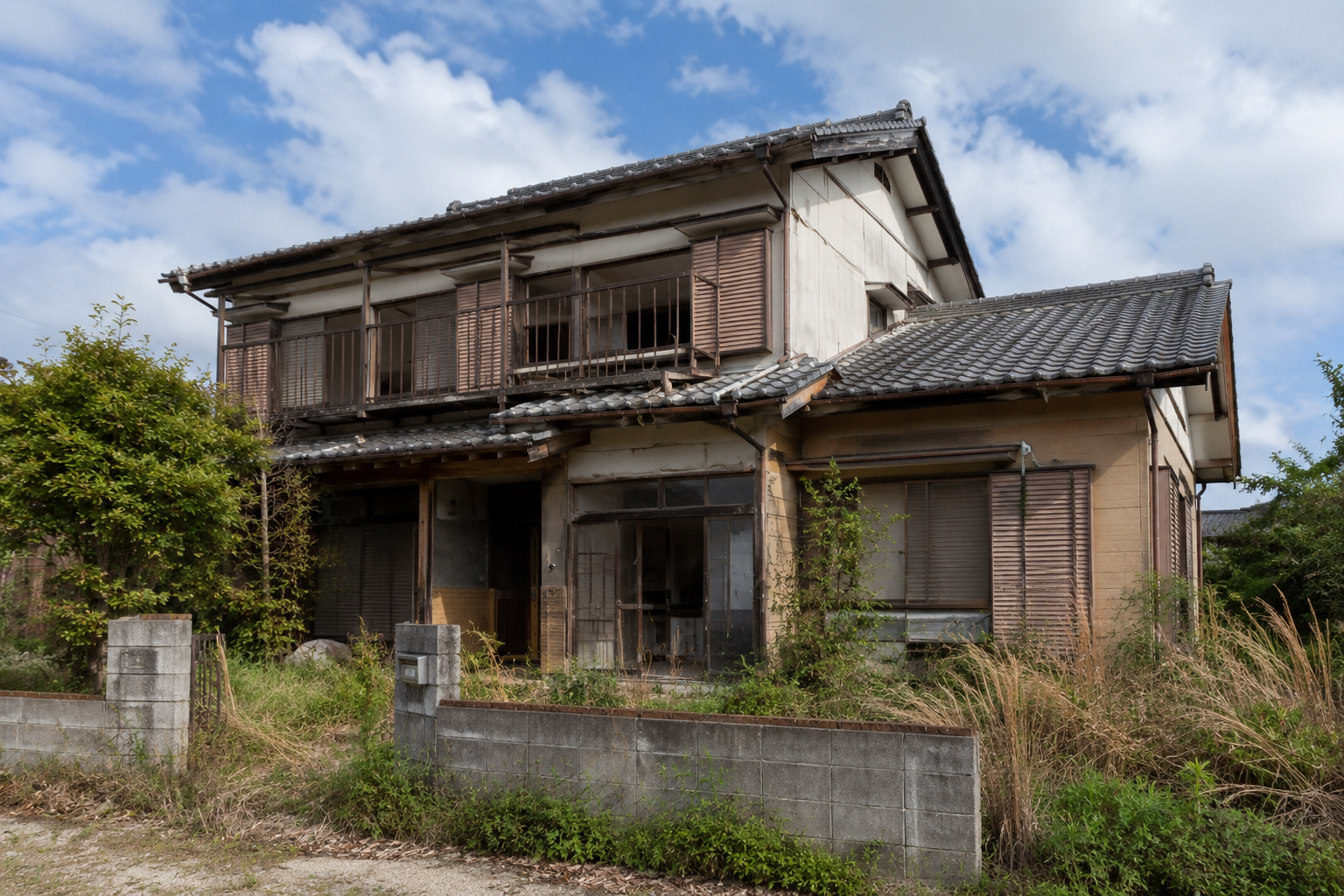
Japan is facing one of the most significant demographic shifts in its modern history. As the population continues to decline and the average age of citizens rises, a new challenge has emerged across the country: the rapid increase in vacant houses, commonly known as “Akiya” in Japanese.
While many view the growing number of abandoned homes as a social and economic problem, others see a unique investment opportunity. In recent years, a new industry has emerged around the renovation, redevelopment, and revitalization of vacant properties. This trend has created exciting possibilities for both domestic and international investors looking to enter the Japanese real estate market.
The Growing Vacant House Problem
Japan’s population peaked at approximately 128 million people in 2008. Since then, the country’s population has steadily declined due to low birth rates and an aging society.
As younger generations move from rural regions to major cities such as Tokyo, Osaka, and Fukuoka, many homes in smaller towns and villages are left behind. In some cases, elderly homeowners pass away and their heirs have little interest in maintaining or living in the property.
As a result, millions of houses throughout Japan now sit vacant.
Many of these properties remain unused for years, creating concerns about structural deterioration, neighborhood safety, declining property values, and community decline. Local governments across Japan are increasingly struggling to address this issue.
However, every challenge creates new opportunities.
The Rise of the Akiya Investment Market
Over the past decade, investors have begun purchasing vacant properties at remarkably low prices. Some homes can be acquired for a fraction of the cost of equivalent properties in major cities.
After purchasing these properties, investors renovate and repurpose them for new uses, including:
- Rental housing
- Vacation homes
- Airbnb and short-term rentals
- Guesthouses
- Restaurants and cafes
- Shared offices
- Community centers
- Senior housing
- International student accommodation
This process is commonly known as Akiya revitalization or vacant house redevelopment.
The goal is not simply to repair old buildings but to create new economic value while contributing to local communities.
Why Foreign Investors Are Becoming Interested
Many foreign investors are surprised to learn that Japan generally places very few restrictions on foreign ownership of real estate.
Unlike some countries that restrict land ownership by foreigners, Japan allows overseas investors to purchase land and buildings with full ownership rights.
This openness has attracted increasing interest from investors in North America, Europe, Australia, Singapore, Hong Kong, Taiwan, and other parts of Asia.
Several factors make vacant house investments particularly attractive:
Low Acquisition Costs
Compared to major global cities, many Japanese properties remain affordable. In rural areas, investors can sometimes purchase houses for less than the price of a small apartment in other developed countries.
Tourism Growth
Japan continues to attract millions of international visitors each year. Traditional Japanese homes often appeal to travelers seeking authentic cultural experiences.
Renovated traditional houses can become profitable vacation rentals or boutique accommodations.
Stable Legal System
Japan offers one of the world’s most transparent property ownership systems. Property rights are well protected, and ownership registration is highly reliable.
Long-Term Potential
As remote work becomes more common, some regional areas are attracting younger residents and entrepreneurs seeking lower living costs and improved quality of life.
This trend may create new demand for revitalized properties in areas that were previously overlooked.
Government Support and Incentives
Recognizing the seriousness of the vacant house problem, many local governments have introduced programs designed to encourage redevelopment.
Examples include:
- Renovation subsidies
- Relocation support grants
- Tax incentives
- Regional revitalization programs
- Low-cost property listings through Akiya Banks
An “Akiya Bank” is a publicly operated database that connects property owners with potential buyers. Many municipalities use these systems to promote local investment and attract new residents.
For investors willing to conduct proper due diligence, these programs can significantly reduce redevelopment costs.
Challenges Investors Should Understand
While vacant house investments can be profitable, they are not without risks.
Potential challenges include:
- Structural damage hidden inside older buildings
- Earthquake resistance concerns
- Property boundary issues
- Inheritance-related ownership complications
- Infrastructure limitations in rural areas
- Renovation costs exceeding expectations
Investors should always work with experienced local professionals, including real estate brokers, architects, contractors, legal advisors, and tax specialists.
Understanding zoning regulations, building codes, and local market conditions is essential before purchasing any property.
The Future of Japan’s Vacant House Market
Japan’s population decline is expected to continue for decades. As a result, the number of vacant houses will likely increase further.
For some, this represents a growing social challenge.
For others, it represents one of the most unique real estate investment opportunities in the developed world.
The future of Japanese real estate may not only be found in luxury condominiums in central Tokyo but also in the thousands of underutilized properties waiting to be transformed across the country.
By combining creativity, investment capital, and local expertise, investors can generate attractive returns while helping revitalize communities and preserve Japan’s architectural heritage.
The vacant house crisis is real, but so is the opportunity.
For forward-thinking investors, Japan’s Akiya market may become one of the most interesting real estate sectors of the coming decade.